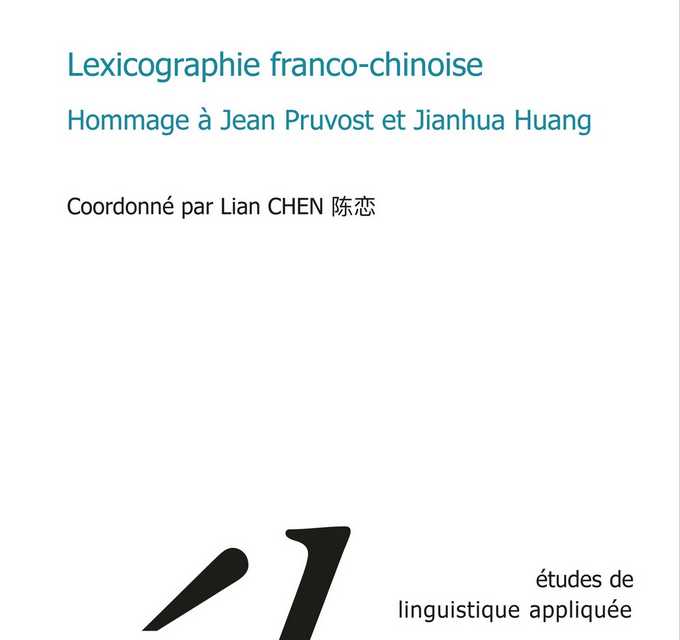
La parution du nouveau numéro 219 de la revue ELA – Études de linguistique appliquée, consacré à la lexicographie franco-chinoise (hommage à Jean Pruvost et Jianhua Huang) :https://www.klincksieck.com/livre/9782252048894/etudes-de-linguistique-appliquee-n3-2025 Remerciements particuliers au directeur de la revue, Jean Pruvost, ainsi qu’à Danh-Thành Do-Hurinvillle et Huy-Linh Dao, pour leur accompagnement éditorial dans ce travail. Comité scientifique ayant contribué […]
Qui est prêt à partager avec moiaussi bien mes moments de bonheurque mes instants de tristesse ? La vie est si longue, je voudrais que tu sois témoin de mon parcours. 谁在最快乐与难过的时候愿意与我一起分享? 日子那么长,想要你见证我成长。
既然不是仙,难免有杂念! 人生何其短,何必苦相念? Puisque nous ne sommes pas des immortels,Il est naturel d’avoir parfois l’esprit rebelle.La vie est si brève, fragile et passagère,À quoi bon se tourmenter et nourrir la chimère ?
Seul un destin profond peut nous faire emprunter encore et encore le même chemin,revenir sans cesse dans la même ville,et revoir, toujours, la même personne.Car en réalité, pour certains êtres, le simple fait de les rencontrer est déjà un signe du destin. 只有很深很深的缘分,才能在同一条路上,走了又走, 同一座城市,去了又去, 同一个人,见了又见! 其实,有些人,光是遇见,就是上上签。
Dans ces jours où nous ne nous contactons plus, est-ce que nous rivalisons à qui est le plus impitoyable, ou bien est-ce que nous souffrons en silence l’un pour l’autre ? 彼此不联系的日子, 我们是在互相比心狠, 还是互相心疼?
Je t’ai dit tant de choses… mais tu n’en as cru aucune.La seule que tu as prise pour vraie, sans l’ombre d’un doute,c’est celle où je t’ai dit : « Je ne t’aime pas. »Heureusement que le manque est silencieux…car s’il avait une voix, il serait assourdissant. 我说那么多话,你都不信,唯独一句 “我不爱你”,你却深信不疑。幸亏思念无声,否则震耳欲聋。
L’amour est étrange. Certaines personnes qui ne s’aiment qu’à 1 % prétendent s’aimer à 100 %, tandis que d’autres, qui s’aiment à 100 %, n’osent même pas admettre 1 % de cet amour.
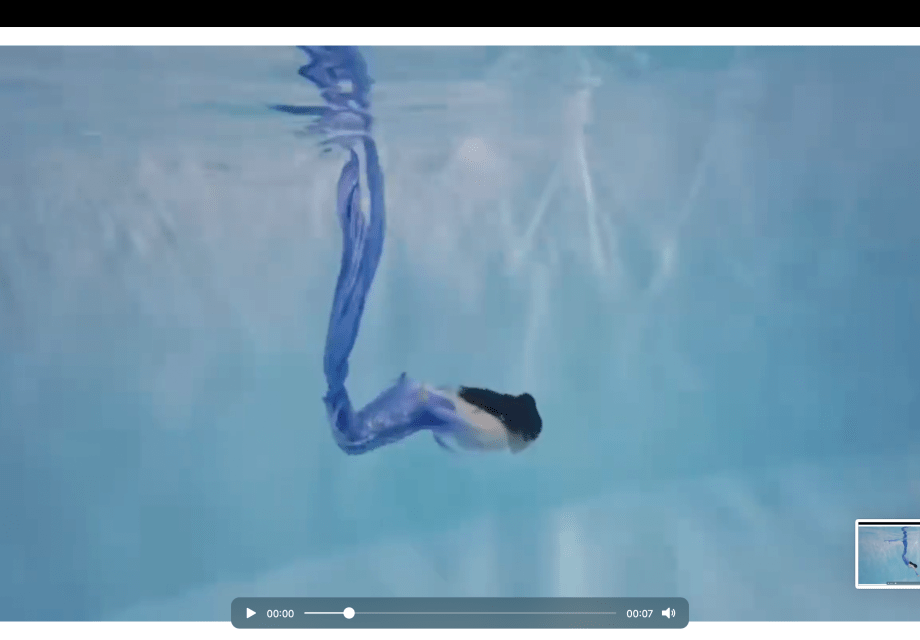
Pour qui s’épanouit la beauté de la sirène ? 人鱼的美 为谁绽放? by @imagesdechine.com Sirène et danseuse : CHEN Jie. 沧海明月高照,Cānghǎi míngyuè gāo zhào,Dans la vaste mer, la brillante lune s’élève lentement. 鲛人泣泪皆成珠;jiāo rén qì lèi jiē chéng zhū;Les larmes des sirènes se transforment en perles sous son éclat. 蓝田红日和暖,lántián hóng rì hé nuǎn, Le chaud […]
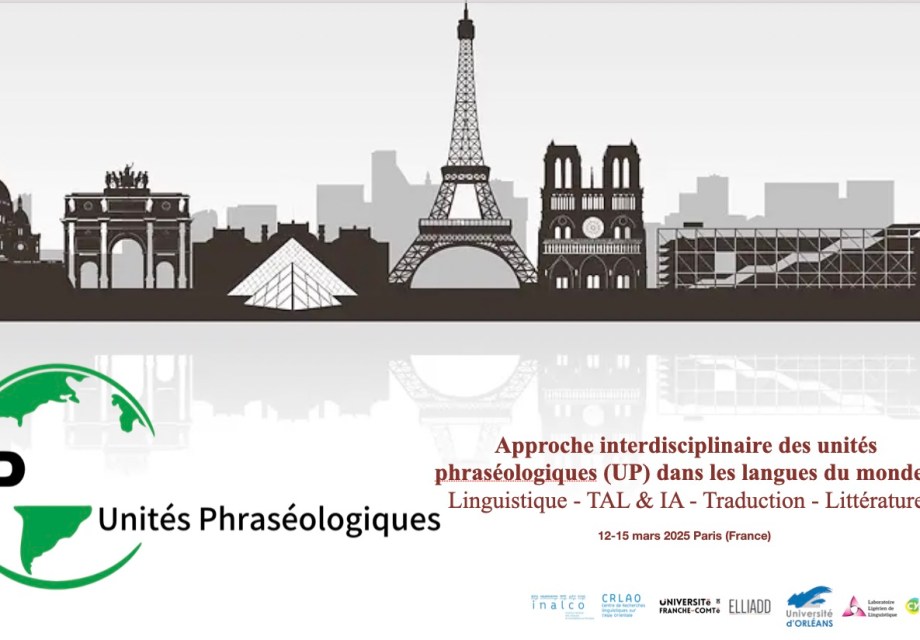
[Français]Appel à contributions(Français – Anglais) Colloque international Approche interdisciplinaire des unités phraséologiques (UP) dans les langues du monde Linguistique – TAL & IA – Traduction – Littérature 12-15 mars 2025 Institut National des Langues et Civilisations Orientales 65 rue des Grands Moulins, 75013 Paris site : https://aiup.sciencesconf.org/ Chères toutes et chers tous, Suite au symposium […]
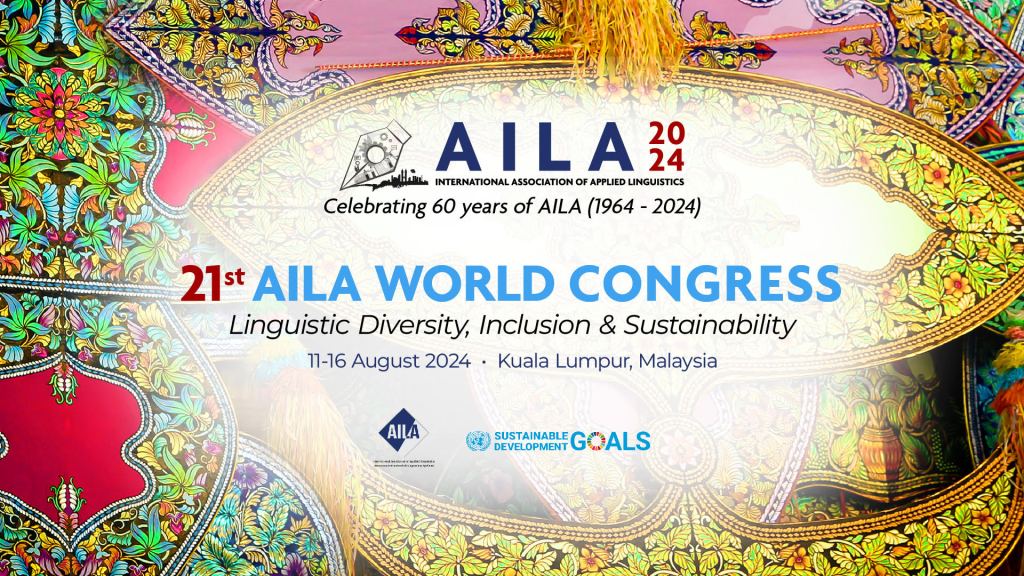
La linguistique appliquée contribue à la recherche innovante dans les domaines de la didactologie, de la traductologie et notamment de la lexicographie. Dans le cadre du AILA 21st World Congress (2024), nous proposons ici un symposium sur la (meta-)lexicographie numérique. Vous trouverez ci-après l’appel à contribution.
Dear colleagues, Applied Linguistics contributes to innovative research in the fields of didactology, traductology, and especially lexicography. In the framework of the AILA 21st World Congress (2024), we propose a symposium on digital (meta-)lexicography. Please find below the call for papers.
Call for papers [AILA 2024 & Symposium] Innovating Digital Lexicography in the Era of Media Convergence
Modality of Symposium: hybrid (online & onsite)
Place and date : 11-16 August 2024 in Kuala Lumpur, Malaysia
Coordinator(s):
CHEN Lian 陈恋
PhD in Language Sciences in the Lexicons, Texts, Discourses, Dictionaries laboratory – Jean Pruvost Center (LT2D, EA7518), Cergy-Paris University. Temporary Teaching Researcher assistants (ATER) in the Texts and Cultures laboratory and department of Applied Foreign Languages, University of Artois.
GENG Yundong 耿云冬
Associate professor, bilingual lexicographer specialist in the School of Foreign Languages – Huazhong Agricultural University, China.
Language: English
Arguments:
“Digital corpus and lexicometric tools have profoundly revolutionized linguistic research and, more particularly, lexicographic research, by multiplying the possibilities of observations.” (Hausmann and Blumenthal 2006: 11). Media convergence presents a significant opportunity for the digital transformation of dictionaries. With the advent of new media, dictionaries can now offer a variety of ways to present content, including text, images, sound, and video. Additionally, hyperlinks enable users to quickly access supplementary data. New media constitute two-way interactive platforms, sometimes free and open, where users can obtain information, interact with it and even disseminate it when and where they want.
This symposium aims to explore various digital (meta-)lexicographic projects worldwide that involve designing, producing, and using dictionaries. These projects should take into account the available technologies, but especially the possibilities “opened up by digital culture which allows flexibility in the processing of data in addition to adding oral and image contributions to writing” (Remysen and Vincent, 2021). It deals with the current distribution of media (online and in paper format), as well as with the new practices of digital lexicography: coexistence of ancient and modern editions, data access, content aggregation, collaborative dictionaries, etc.
The researcher should explore and create new concepts or hypotheses for an improved and innovative dictionary. We are interested in, including but not limited to, innovations in digital (meta-)lexicography, exploration of new approaches to lexicography, innovations in lexicographic forms, etc., monolingual, bilingual and multilingual, examination of the user needs in the digital revolution, carried out in a dynamic of linguistic revitalization and elaboration, and which contribute to the creation of new content.
Project leaders and scientific research institutes are invited to discuss and present the main advances in digital dictionaries, and related applications, which bring visibility to languages and cultures in particular.
Method of submission:
If you wish to present your digital lexicography project (at the design or application stage) at the symposium, please send your proposal, of a maximum of 300 words (excluding bibliographic references) in English by April 30, 2023, to CHEN Lian loselychen@gmail.com and to GENG Yundong benedict_geng@mail.hzau.edu.cn. Presentations will be 20 minutes in length (each followed by a 10-minute discussion period).
We would be very grateful if you could share this call for papers to your colleagues.





 Images de Chine